A HK$170 Million Jar: What Porcelain Auction Records Mean for Gift Shop Buyers
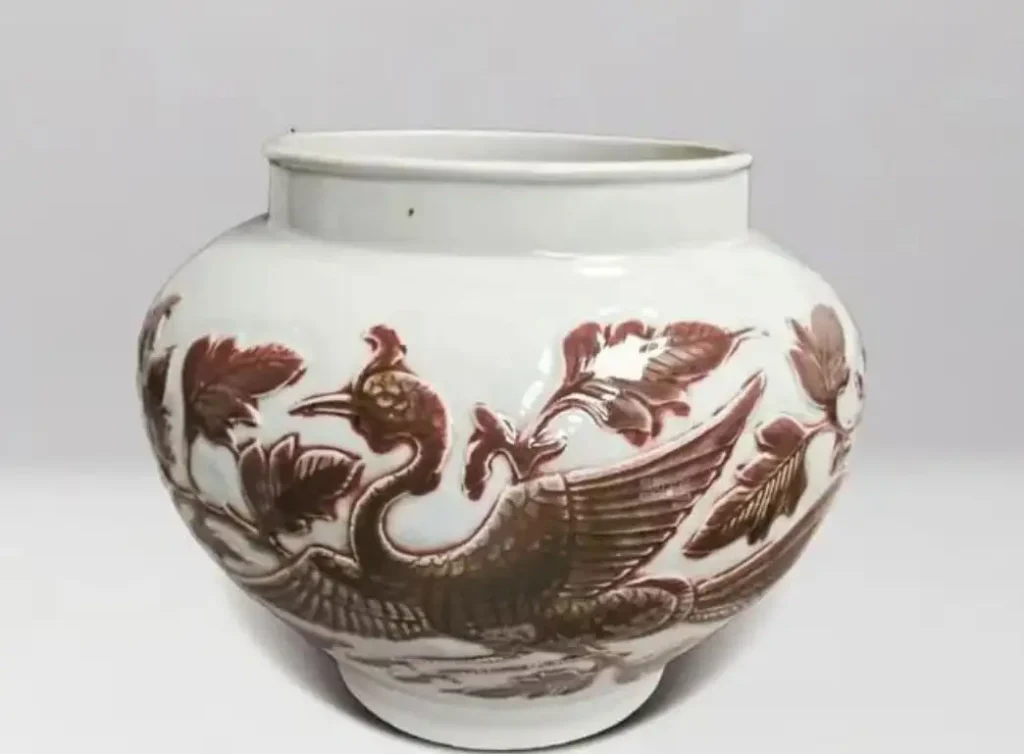
The 2026 Hong Kong summer art auction closed with antique porcelain as the headline category. A Yuan dynasty relief underglaze red phoenix jar fetched HK$170 million after extended bidding, a record for underglaze red in recent years. A Yuan blue and white dragon meiping traded at HK$30 million. Almost every high-ancient and imperial kiln piece on offer sold, which is the part the trade cares about more than any single number.
None of that sets your cost price. A HK$170 million jar and a 9 RMB reproduction share a motif, not a market. But auction results do something quieter and more useful: they tell you what your customer has seen, and therefore what they will recognise on a shelf two years later.
What sold, and why those two idioms
The two headline lots were a phoenix jar in underglaze red and a dragon meiping in blue and white. That is not a coincidence. Blue and white and underglaze red are the two most legible Chinese ceramic signatures in the world, and both are built on the same technical trick: painting the colour under the glaze so it survives the firing and cannot wear off.
- Blue and white uses cobalt. It is stable, it fires reliably, and it is the reason a blue-and-white pattern reads as "Chinese porcelain" to a shopper in Ohio or Osaka.
- Underglaze red uses copper, which is chemically awkward: it disappears in oxidation, turns muddy if the kiln atmosphere drifts, and historically produced a high failure rate. A large piece that survived is rare, which is why the price is where it is.
For a buyer the takeaway is simpler than the chemistry: the two idioms with the strongest recognition are also the two a factory can reproduce most economically today. Cobalt blue under a clear glaze is the cheapest decoration in ceramics.
The trickle-down, and how long it takes
Museum shops are usually first, because they can reference an exhibition or a collection without claiming anything about the object. Department-store gift floors follow, then souvenir shops, then online. The lag is roughly 12 to 24 months from an auction headline to a shelf in a mid-market gift shop, and the products that land there are not copies of the lot - they are motif-level references.
What that looks like in practice: blue-and-white dinnerware, dragon and phoenix motifs on vases, porcelain-shaped candle holders, and the "imperial" packaging that sells a 25-dollar box. The customer is not buying porcelain. They are buying the feeling of a museum.
Antique, reproduction, or "in the style of" - the line that matters
This is where buyers get into trouble, and it has nothing to do with taste.
- Never call a new piece antique. In the EU, UK, US and most of Asia, describing a modern object as antique to induce a sale is a misrepresentation, and marketplaces will remove the listing. "Vintage style", "in the style of" and "Yuan motif" are safe; "antique reproduction of a Yuan jar" is not.
- Do not copy a specific museum or auction piece. The dynasty is public domain. A particular vessel's exact profile, proportions and painted scene can still be protected as a design or as a photographic work, and a museum will enforce it. Copy the idiom, not the object.
- Check origin rules before you export. Genuine antiques over 100 years old need export permission from China and often an import licence at the destination. A container of "antique style" ceramics will still get held if the paperwork says antique.
- Test for food contact. A decorative blue-and-white vase and a blue-and-white mug are different products under the law. If the item touches food, the glaze has to pass lead and cadmium leaching tests.
Sourcing the look at wholesale: three decoration methods
"Blue and white" is a look, not a process, and the price difference between processes is large enough to decide your retail price.
- Underglaze decal (in-glaze transfer). A printed transfer is applied to the bisque and fired under the glaze. This is what most volume blue-and-white is: durable, dishwasher-safe, colour-consistent, and the cheapest per unit. Look for a fine dot screen under a 10x loupe.
- Hand-painted underglaze. A painter applies cobalt with a brush, then the piece is glazed and fired. Brush marks, small density variation, and a 3-5x price premium over decal. This is where "hand-painted" claims belong.
- Overglaze enamel or decal. Applied on top of the fired glaze and refired at a lower temperature. Bright colours, gold, and the widest palette - but the decoration sits on the surface and can wear or leach, so it is not the choice for a daily-use mug.
Ask the supplier which one you are being quoted. A "hand-painted blue and white" quote at decal prices means the outline is hand-painted and the fill is printed, which is a legitimate product but not what the buyer thinks they ordered.
Three price tiers that work on a gift floor
Auction-driven interest does not create demand for expensive ceramics. It creates demand for the motif at an accessible price. A shelf that works usually spans three tiers:
- Entry, 12-20 dollars retail: mugs, small bowls, trinket dishes. Sold as a gift or a souvenir, bought on impulse.
- Mid, 35-70 dollars: a decorated vase or a lidded jar with a box. This is the museum-shop zone, and it is where the packaging does most of the selling.
- Top, 120 dollars and above: a large hand-painted piece or a matched set, sold to the customer who wants a display object rather than a usable one.
All three can come from the same factory body. The difference is decoration time, size and packing. Our glazed vase, tall vase and ceramic mug sit at those three entry points, and the tableware set is what a shop adds once the motif has proven itself.
Where the lucky cat fits into the same story
It is worth noticing that the strongest-selling ceramic gift in most Asian gift shops has nothing to do with imperial porcelain. The maneki neko is a folk object, reproduced in millions, and it sells because the meaning is unambiguous. That is the same mechanism as the blue-and-white jar, at a different price: recognition, not rarity.
If you are building a ceramic shelf, the sensible pairing is one heritage-motif line and one meaning-led line. The ceramic lucky cat range covers 6 to 32 cm with coin banks, waving cats and treasure basins - see the treasure basin and the waving cat for the two ends of that range.
What to ask a supplier before you commit
Six questions, all answerable in writing, and each one is a place where a cheap quote hides a cost:
- Is the decoration underglaze, in-glaze transfer, or overglaze? Which part is hand-painted?
- What is the lead and cadmium result for this specific glaze and colour, and on which test standard?
- Is the piece dishwasher and microwave safe, and is that claim tested or assumed?
- What is the colour tolerance between production batches, and do you keep a master sample?
- What is the second-quality rate for this decoration, and how is it priced?
- What is the carton drop-test result for the packed unit?
A supplier who answers all six without hesitating is a supplier who has shipped this product before. The rest are learning on your order. If you are new to importing ceramics in general, the low-MOQ guide explains how to test a supplier with one carton before committing to a container.
The short version
Auction records are a leading indicator of taste, not of price. When a Yuan jar makes the news, the customer who walks into your shop eighteen months later is looking for blue and white, and will pay 40 dollars for the feeling. Buy the motif in the cheapest process that meets the safety standard for its use, and spend the difference on the box.